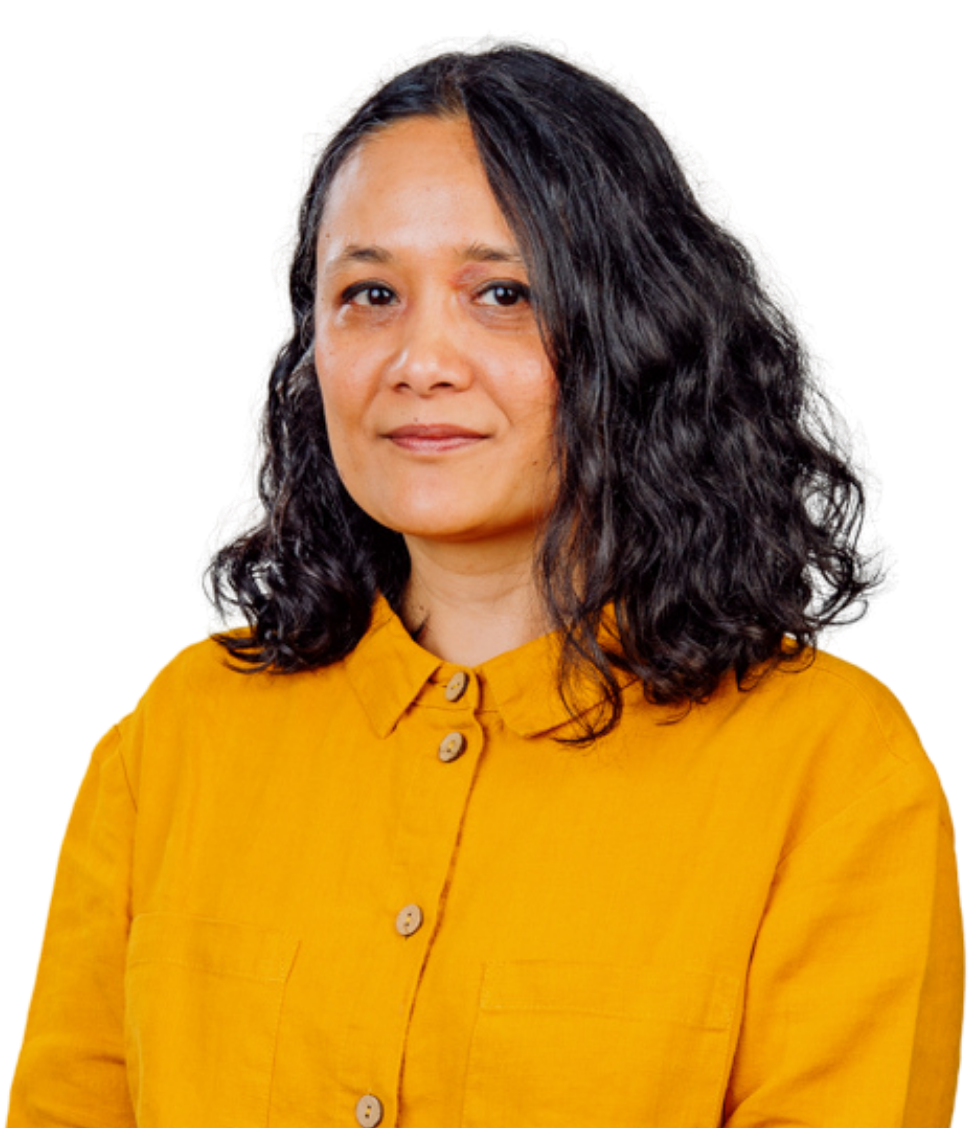
Assemblymember Shrestha Says NYSERDA’s Memo Claiming Costs of State’s Climate Goals Was Blatantly False and Misleading
Kingston, NY – See AM Shrestha’s statement below:
“Last Thursday, Governor Hochul suggested the cost of fully implementing the state’s climate law was an average of $3,500 per New Yorker. The source of this claim is largely believed to be a memo from NYSERDA on the “likely costs of CLCPA compliance.” The problem, however, is that that is not what the memo analyzes at all.
NYSERDA’s memo does not analyze the cost of the state implementing the state’s goals. It analyzes the cost of implementing one specific program, cap and invest, which is not required by the state’s climate laws, is not the only way of meeting the state’s climate goals, and can be designed in a myriad of ways whereas the version NYSERDA has chosen is an unnecessarily expensive one, rife with faulty assumptions, that none of us are demanding to implement.
A cap and invest program works by putting a limit on how much pollution companies can emit, i.e. the “cap,” and requiring them to pay for each ton of emissions which would then fund clean energy and community projects, i.e. the “invest.” However, the effectiveness of such a program depends on the details, especially the guardrails in place to make sure the costs aren’t passed onto ratepayers. In California, their cap and invest program has generated over $30 billion in climate and community investments since 2013 and directed $16 billion to reduce household energy costs through utility bill credits. In New York, new reports show that the version we would like to see implemented would result in a saving of $1,060 per household earning up to $200k per year, among other benefits. Additionally, the state’s own 2024 analysis showed that millions of households would break even or fair better after accounting for rebates and benefits within the cap and invest program. So why has NYSERDA chosen the most expensive and faulty version to claim it as a cost of our climate laws in general? Simple: to blatantly mislead the public into thinking the Governor would be correct in rolling back the state’s climate laws, citing affordability concerns.
In reality, the most recent increase in energy costs on the supply side are coming from heightened reliance on “natural” gas, which is a fossil fuel. In New York, where natural gas is the primary fuel for roughly half of the electricity generated in the state, the wholesale price has increased from $25.70/MWh to $89.23/MWh in just over two years, according to data from NYISO. And unlike renewables – such as wind, solar, and geothermal – that give us cheaper, cleaner energy and energy independence, “natural” gasis a volatile source of energy easily affected by geopolitical events and shocks in the financial market, which is exactly what we’re seeing right now. Likewise, gas is also increasingly expensive on the delivery side, because of the infrastructure needed for it, much of which is aging.
The path forward is simple: New York has a number of options on how to implement its climate goals, and we need to choose the ways that help us meet climate goals and lower energy costs. One such option is for the New York Power Authority to ambitiously build publicly-owned renewables, which would then fund automatic bill discounts for the neediest households in the state. Another is to no longer run our energy delivery utilities like Central Hudson as investment vehicles for shareholders, and instead run them as publicly-owned corporations with no profit margin – this would ensure the lowest cost to run our energy system while getting us a cutting-edge 21st century grid we need right now; and that’s exactly why we’re fighting to pass our bill, the Hudson Valley Power Authority Act.”
Dear Alec,
We saw in the Public Service Commission’s unanimous vote to approve rate increases for Central Hudson that customers will never get the low rates and the twenty-first century grid they deserve as long as our energy utilities are profit-earning vehicles for investor-owners. During their deliberation, state regulators explicitly told us that the approved rates must balance “affordability concerns against shareholders’ constitutional right to earn a reasonable return on investment.”
And that right there is the root of the problem! It's why we introduced the Hudson Valley Power Authority Act to replace Central Hudson with a not-for-profit publicly-owned corporation. Here's a recap from six town halls we did last month to discuss this topic and take questions. Thank you to the over 600 people who attended, and to the libraries, towns, and theaters who hosted us.
Woodstock drew about a hundred people on an especially hot day Saturday.
The Department of Public Service's own statements have made the root issue clear: in a model where investors are allowed to own a utility, the needs of the investors are as important as the needs of the public. Our solution, in that case, is to get rid of investor-owners altogether. The truth is, we have collectively spent more than a century already waging a regulatory battle to lower profits on energy delivery, and what we’re saying now is that we’ve had enough. We no longer want to waste our time on a futile effort to lower profits, we want to eliminate profits altogether. As I explained at our town halls, it’s not just the current rate increases that we’re concerned about, it’s the permanent path of excessive rate increases this ownership model puts us on.
We kicked off our six town halls in an intimate setting at the Gardiner Library
When you have a financing model where every shareholder investment in an aging and bloated capital infrastructure increases profits for shareholders, it means two things: unnecessarily high rate increases will go on forever, and the scale of investments our grid needs become either too cost prohibitive or not profitable enough. Stuck on the lose-lose end of this quandary is the public. The only winners in the current model are the investors.
Olive residents packed the Olive Free Library, camping chairs included!
We're thrilled that every town hall we did last month had a packed attendance. We chose venues that were a mix of small and big so that we could provide more intimate conversations but enough capacity to fit a lot of people in total. All in all, over 600 people attended, with a strong finish in Rosendale, where 200 attended with standing-room only attendance.
We were fortunate to be able to host our Saugerties town hall at the Orpheum Theatre
It was important for us to do these town halls because as we build local support to win the Hudson Valley Power Authority Act, the main battle is going to be a battle of information. We’ve already had Central Hudson hand out counter-information at our town halls, and to sustain the support for our bill, it’s important that people have the right information from us from the get-go. As we saw in Maine, where the parent companies of investor-owned utilities outspent the ballot proposal for public-ownership by 20 to 1, the information war, when it really takes off, becomes a war of who has more money. We hope to do more of these events in other cities and towns next year, and in the meantime, we'll be posting a recording of the presentation in the coming weeks.
Rhinebeck was another packed intimate gathering at the Starr Library. We hope to bring the town hall to a bigger venue in Red Hook next year!
We finished strong in Rosendale, with 200 attendees. We look forward to seeing you at more town halls in the future.
Testimonials from attendees:
“I came to the town hall to get a better understanding of the viability of replacing Central Hudson with a state corporation that could provide affordable and reliable energy services.I left the town hall convinced that Hudson Valley Power Authority is the needed solution.”
—Marc Cassidy, Rosendale Town Board Member
“I think I spoke for virtually the entire packed room at the town hall when I said how proud I was to be represented in Albany by Sarahana. While many of us have long-standing complaints about Central Hudson (I've been a CH customer for decades), what was uplifting about the town hall was that it was positive. Sarahana offered a solution, laid it out clearly and in detail – and answered all our questions about the Hudson Valley Power Authority. She has many constituents ready and eager to transition from an incompetent, out-of-touch, for-profit entity to a more responsive public institution with democratic/community inputs.”
—Jeff Cohen, Saugerties Resident
“I attended the Rhinebeck meeting even though I live in Catskill. I was impressed with Assemblymember Shrestha's command of the subject and ability to answer all questions in a clear and concise manner.Even when there were some contentious questions Ms. Shrestha was kind and able to respond with respect for the question and make a strong case for public utilities. I'm very excited at the prospect of having lower energy costs and am hopeful we can follow in the footsteps of those publicly run utilities who have some of the lowest energy costs in the country.”
—Bethany Richardson, Catskill Resident
“I have been following with great interest Assemblymember Shrestha's efforts to create the Hudson Valley Power Authority. I attended the Rosendale meeting to get an update and was delighted to see a standing room only crowd. The presentation was fabulous: clear and succinct presentation, great slides, and compelling reasons why we need a municipal power authority, not an investor-owned utility. My electric bills have continued to rise, breaking $400 last month. It is unsustainable, yet there is little we can do – we can't have ourelectricity delivered from a different utility. We need to upset the apple cart and make our electric utility a not-for-profit, state owned entity, and one that is committed to a clean, just, equitable and innovative future.”
—Michael Zierler, New Paltz Resident
“It was so helpful to hear more of the details of the HVPA, and to have Sarahana there walking us all through it in person was amazing. I was already sold on public utilities, but this information got me even more excited”
—Adam Liebowitz, Marbletown Resident
If you attended a town hall and want to share your testimony, just write back to this email! Hope to see you at another public event in the near future,