Assemblymember Grace Lee Celebrates $2 Million in State Budget Funding for Life-Saving Cancer Research for 9/11 First Responders
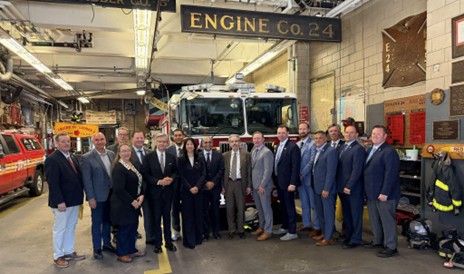
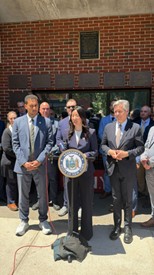
New York, NY – Assemblymember Grace Lee celebrated the inclusion of $2 million for Montefiore Einstein Comprehensive Cancer Center in the New York State Fiscal Year 2026–27 Budget. The funding will expand a groundbreaking cancer genomics study focused on identifying precancerous genetic mutations in World Trade Center (WTC)-exposed 9/11 first responders, providing life-saving early detection and medical intervention to firefighters and emergency personnel who risked their lives responding to the September 11th terrorist attacks.
“Our first responders showed true heroism on 9/11, and many have carried the lasting health consequences of that day ever since. More first responders have died of 9/11 related health complications since 2001 than were lost on that tragic day,” said Assemblymember Grace Lee. “As we approach the 25th anniversary of September 11th, this funding is a meaningful commitment to the brave men and women who served at Ground Zero. The research underway at Montefiore Einstein Comprehensive Cancer Center is saving lives right now, and expanding it will ensure that more first responders get the early detection and care they deserve. I am proud to have fought for and secured this funding in the New York State Budget.”
Scientists at the Albert Einstein College of Medicine, in collaboration with the FDNY World Trade Center Health Program, have established a biobank of blood and serum samples from thousands of FDNY first responders exposed to the WTC site. In 2022, New York State awarded $1 million to support initial sequencing of 1,000 blood samples from WTC-exposed firefighters. The results showed that 14% of sequenced first responders harbored disease-associated genetic mutations – twice the rate seen in firefighters without WTC exposure – and those with these mutations were nearly five times more likely to develop leukemia.
This research – led by Amit Verma, MD, Deputy Director of the National Cancer Institute-designated Montefiore Einstein Comprehensive Cancer Center and Chair of Oncology at Montefiore and Albert Einstein College of Medicine, and David Prezant, MD, FDNY Chief Medical Officer – had an immediate clinical impact. First responders identified as high-risk were directly contacted and referred for comprehensive medical evaluation, enabling early detection, enhanced monitoring, and timely intervention. Many more additional blood samples from WTC-exposed first responders remain unanalyzed in the existing biobank. The new funding will allow researchers to sequence an additional 1,000 of those samples, ensuring that more first responders at elevated risk are identified and receive potentially life-saving surveillance and treatment.
“The generous support of Assemblymember Grace Lee and our New York State representatives are directly contributing to our ability to understand why certain first responders may experience an elevated risk of particular cancers,” said Amit Verma, MD, Deputy Director of the National Cancer Institute-designated Montefiore Einstein Comprehensive Cancer Center and Chair of Oncology at Montefiore and Albert Einstein College of Medicine. “These findings have the potential to teach us invaluable lessons about screening as well as the deployment of interventions that could benefit our first responders, and in general, populations exposed to environmental toxins like wildfires and beyond.”
"More than 15,500 FDNY responders were exposed on 9/11, and today over 130,000 people depend on the WTC Health Program. Cancers are increased, but thanks to this funding from New York State, we can accelerate our research efforts to provide earlier detection, further improve survival rates and ensure that no responder is left behind,” said Dr. David Prezant, FDNY Chief Medical Officer.
“We are very grateful for Assemblymember Lee’s attention to this funding,” said Jim Brosi, President of the Uniformed Fire Officers Association. “Early detection for members who have been exposed to such large amounts of toxins is the first step in creating better healthcare, better treatment, and better survivability. The importance of this type of testing will not only benefit first responders but will benefit all who were down at Ground Zero either as residents and volunteers. Hopefully those people will also benefit from the same early detection and better treatment.
Manhattan Borough President Brad Hoylman-Sigal said: “I’m grateful to Assemblymember Grace Lee for helping secure $2 million in the state budget to support vital 9/11 first responder cancer research at the Albert Einstein College of Medicine, particularly when cuts to scientific research are occurring at the federal level under the Trump administration. This groundbreaking genomic mutation research will save lives and improve early detection rates. We must never forget the bravery of every first responder who served on 9/11 – and we will always fight to ensure they receive the highest level of care as they work to beat cancer.”
“Twenty-five years after September 11th, we are still living with the consequences of that day, especially the first responders who ran toward danger and have carried the health impacts ever since,” said Council Member Christopher Marte. “This funding is a critical investment in giving them the early detection, care, and dignity they deserve. I am grateful to Assemblymember Grace Lee for securing this support, and to the researchers and medical professionals at Albert Einstein College of Medicine, the FDNY, and the WTC Health Program for their life-saving work on behalf of the heroes who served our city when we needed them most.”
Justine Cuccia, president of the Battery Park City Homeowners Coalition, said: “When my family and I emerged from the dust cloud that morning 25 years ago, and looked back at the ruins of Lower Manhattan while we were evacuated to New Jersey in a police boat, we thought, ‘thank God this is over. We made it out.’ We were wrong. As a survivor of two September 11-related cancers, I am still trying to make my way out of the ongoing tragedy that began that day. Like thousands of other members of the Lower Manhattan community, I believed my government when they said, a few weeks later, that it was safe to go home. In the years since, that misplaced trust has cost the lives of more friends and loved ones than I ever would have thought possible. So this is personal for me, and for all of us. Allocating research dollars to the search for answers about September 11 cancers is a downpayment on making that right. And everyone whose life has been touched by this still-unfolding disaster is grateful to Grace Lee for her leadership.”
"I applaud the assemblywoman's effort and hard work in securing this lifesaving grant for 9/11 Responders. Too often WTC Cancers are found too late for beneficial treatment and grants like this one will make a major difference in the early cancer screenings and treatment," said Gary Smiley, FDNY EMS Local 2507 Uniformed EMTs, Paramedics & Fire Inspectors WTC Liaison.
“I want to thank Assemblywoman Lee for her efforts at supporting research on the continuing impact of the toxins on 9/11 responders being done by Doctors David Prezant and Amit Verma, said Benjamin Chevat, Executive Director of 911 Health Watch and Citizens for the Extension of the James Zadroga Act.”